
For years, people struggling with their weight were often given the same advice: eat less, exercise more, and try harder.
But body weight is not controlled by willpower alone. It is influenced by hormones, brain signaling, genetics, sleep, stress, medications, muscle mass, insulin sensitivity, and the body’s natural drive to protect its energy stores.
GLP-1 injections have helped bring that biology into the public conversation.
Medications such as semaglutide and tirzepatide work with hormone pathways involved in appetite, digestion, and blood-sugar regulation. Although they have become widely known for weight loss, their effects go beyond simply making someone eat less.
“Body weight is not controlled by willpower alone. It is influenced by a complex network of hormones, brain signals, genetics, sleep, stress, and metabolism.”
What is GLP-1?
GLP-1 stands for glucagon-like peptide-1. It is a naturally occurring incretin hormone released by the intestines after eating.
Think of GLP-1 as part of the body’s internal communication system. After a meal, it sends signals that help the brain, pancreas, stomach, and liver respond to the food entering the body.
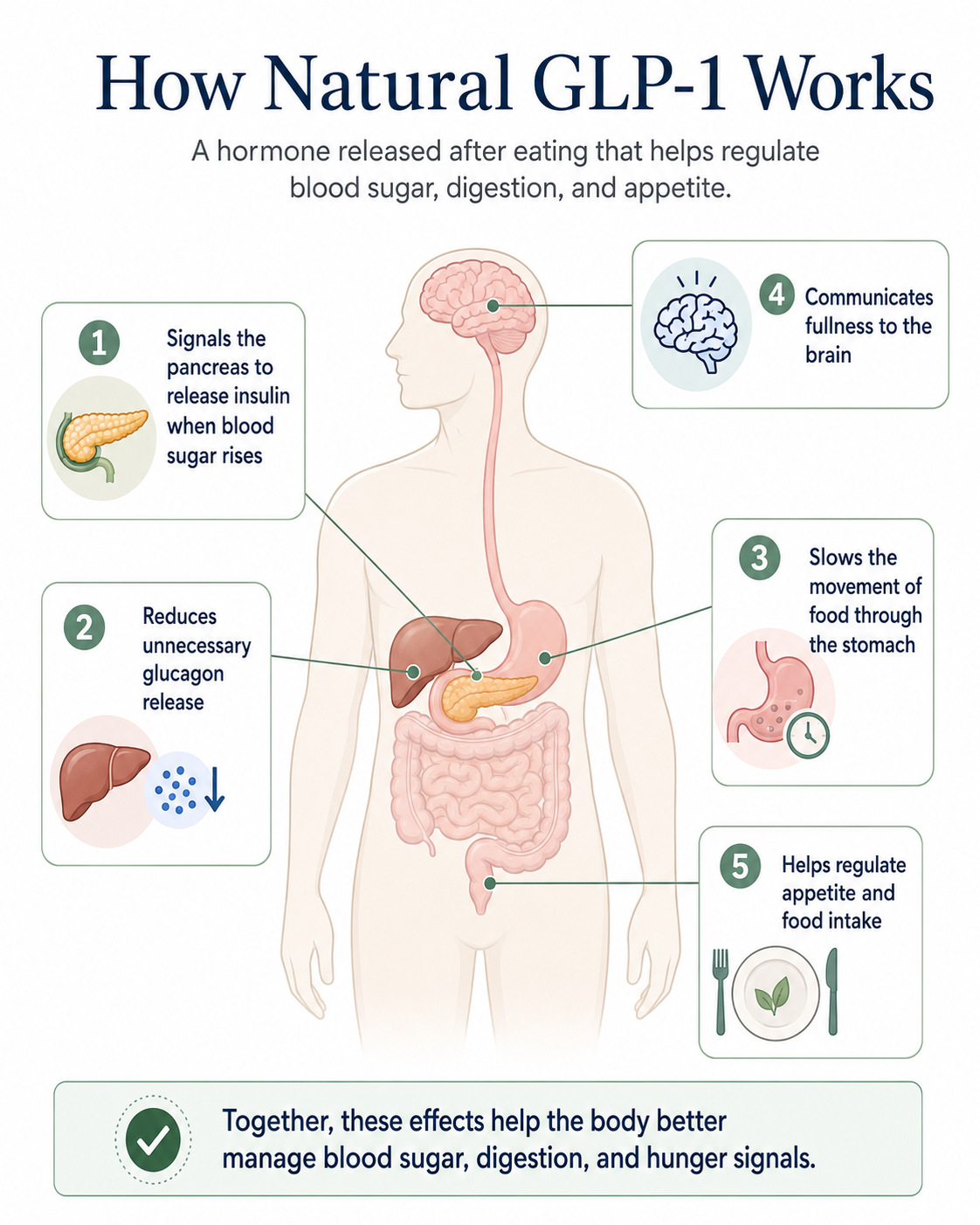
Natural GLP-1 helps:
Signal the pancreas to release insulin when blood sugar rises
Reduce unnecessary glucagon release
Slow the movement of food through the stomach
Communicate fullness to the brain
Help regulate appetite and food intake
Natural GLP-1 is broken down quickly. GLP-1 medications are designed to activate the same receptor while remaining active much longer, allowing many formulations to be taken once weekly.
Semaglutide is a GLP-1 receptor agonist (a substance (like a drug or hormone) that binds to a cell receptor and triggers a biological response, it basically mimics the actions that occurs when the naturally occurring substance binds). Tirzepatide is similar in action, but slightly different because it activates receptors for both GLP-1 and another incretin hormone called GIP.
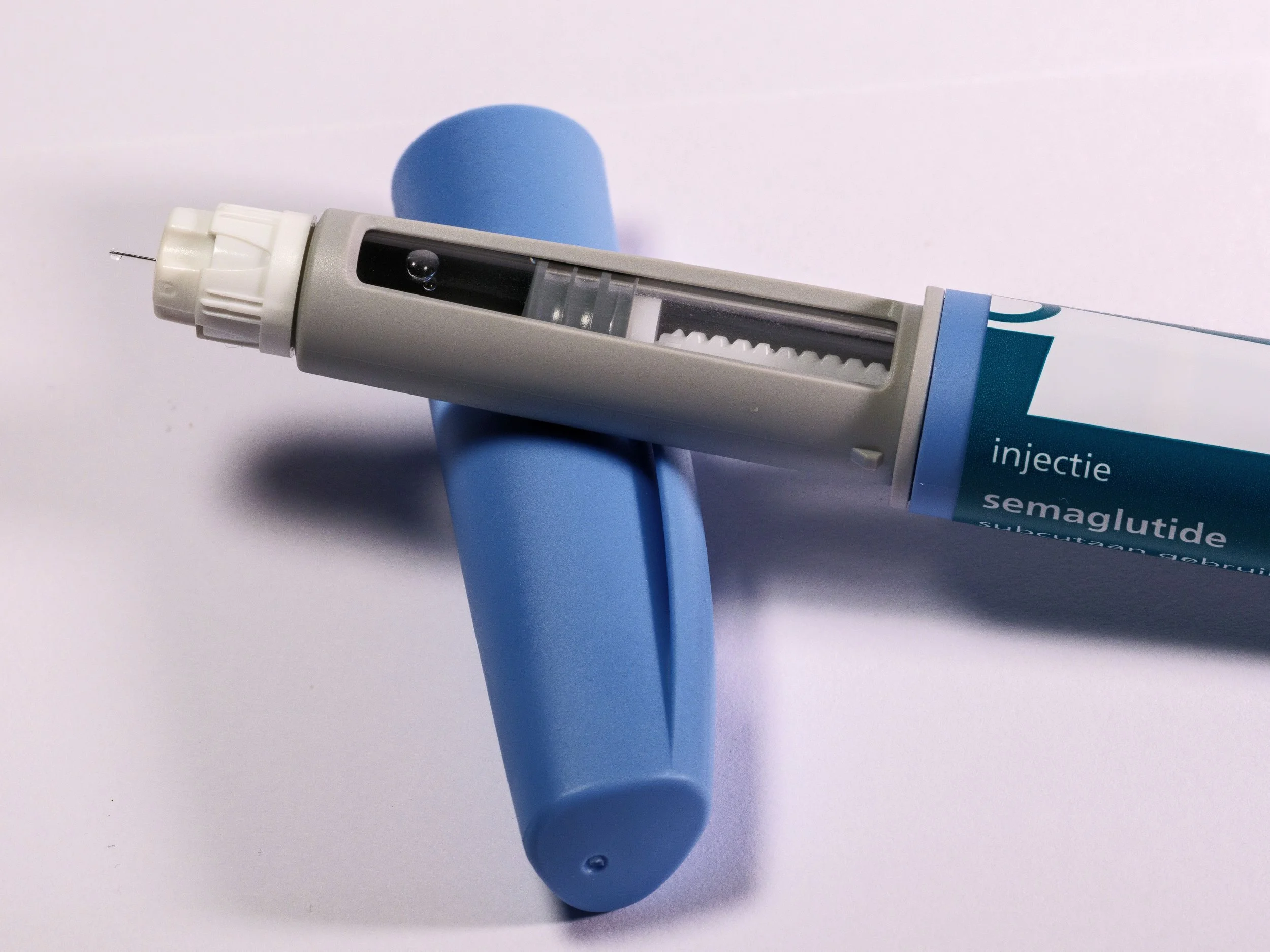
Semaglutide Pen-injector
Although these medications are often discussed as one group, they are not identical. Their mechanisms, approved uses, doses, side effects, and average results differ. You can speak to your healthcare provider, or our obesity expert providers for more guidance.
How do GLP-1 injections support weight loss?
Weight loss generally occurs through a combination of:
Reduced hunger between meals
Earlier fullness during meals
Fewer or less intense cravings
Lower overall caloric intake
Improved blood-sugar regulation
Greater ability to follow a consistent nutrition plan
In a major clinical trial, adults with overweight or obesity who received semaglutide 2.4 mg alongside lifestyle intervention lost an average of approximately 14.9% of their starting body weight over 68 weeks, compared with about 2.4% among participants receiving placebo.
In another major trial, participants receiving the highest studied doses of tirzepatide experienced average weight reductions of approximately 19.5% to 20.9% over 72 weeks, compared with 3.1% with placebo.
These results are averages, not guarantees. Some patients lose more, some lose less, and others may not tolerate the medication.
Results depend on factors such as the medication, dose, length of treatment, nutrition, physical activity, sleep, underlying health conditions, and individual biology.